Should I Regrade My Yard or Install a Drainage System?
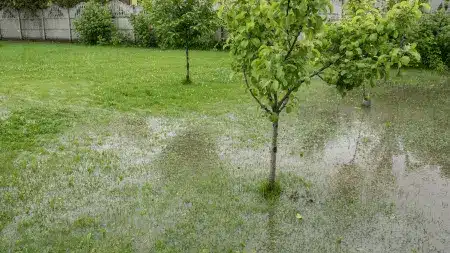
If water keeps collecting in your yard, running toward the house, or leaving parts of the property soggy long after the rain stops, there are usually two broad ways to address it: change the grade so water moves somewhere better, or install a drainage system that collects and redirects it.
The right answer depends on how the water is moving across the property. At All Seasons Waterproofing & Drainage, we do not assume every wet yard needs a French drain or that every low spot can be fixed with more soil. We look at the slope, where runoff is coming from, how quickly the soil drains, and where the water can safely go before we recommend a solution.
What Does Regrading a Yard Actually Do?
Regrading changes the shape of the ground so surface water flows in a better direction. If the yard slopes toward the house, water may naturally collect near the foundation. In that situation, adjusting the grade can help move runoff away before it becomes a basement, crawl space, or landscaping problem.
Regrading can also help when there is a shallow low spot that holds water after rain. If there is enough room to create a consistent slope toward a lower part of the property, reshaping the surface may be all that is needed. The important point is that grading works best for surface water. It changes where water flows across the top of the ground.
When Is Regrading Usually the Better Option?
We are more likely to consider grading when the problem is caused by the shape of the property itself. That may include:
- Soil sloping toward the foundation
- A shallow depression that holds rainwater
- Runoff moving across the lawn in the wrong direction
- Landscaping that has settled over time
- A low area created by previous construction
- Water that can be redirected naturally without creating another problem
If gravity can move the water to a safe location, grading can be a simple and effective solution. The challenge is making sure there is actually somewhere lower for the water to go. Adding soil beside the house without planning the rest of the path can simply move the puddle a few feet farther into the yard.
When Does a Drainage System Make More Sense?
A drainage system is often a better fit when water cannot be managed by surface slope alone. That can happen when the property is relatively flat, the water is coming from below the surface, runoff is concentrated in one area, or there is no practical way to create enough slope. Depending on the problem, the solution may involve:
- A French drain
- Catch basins
- A trench drain
- Underground downspout drainage
- A sump system
- A dispersion or discharge system
- Another type of subsurface or surface drainage
Each of those systems handles water differently. The right one depends on whether we are trying to collect surface runoff, groundwater, roof water, or a combination of sources.
French Drain or Regrading?
This is one of the most common decisions homeowners ask us about. A French drain is designed to collect water moving through saturated soil. It can be useful when the ground stays wet even though the surface slope looks reasonable. Regrading is usually better at controlling water that is visibly running across the surface.
If water flows downhill across the lawn and gathers near the house, the grade may be the main problem. If the yard stays soggy for days without much visible runoff, subsurface drainage may deserve more attention. Sometimes both conditions are present. A property can have poor surface grading and slow-draining soil at the same time. In that situation, correcting only one part of the problem may not be enough.
What If My Yard Is Flat?
Flat yards can be difficult because water has very little natural slope to follow. If there is no meaningful drop between the wet area and a safe discharge point, simply adding soil may not create enough grade to solve the problem. It may also push water toward a neighbor, sidewalk, driveway, or another part of your property.
This is when we may consider collecting the water and moving it through piping instead. The key question becomes: Where can the drainage system discharge? A drain without a reliable outlet can fill up and stop working during the weather when you need it most.
What If My Yard Slopes Toward the House?
That is a situation where grading deserves serious attention. Surface water naturally follows the slope toward the lowest point. If the house sits at the bottom of that slope, rainwater may collect along the foundation before it has a chance to drain away.
In some cases, we can improve the grade close to the home and direct water toward another part of the property. In others, the overall site may continue sending too much water toward the house, so a drainage system is needed to intercept it.
We want to look beyond the first few feet around the foundation. Sometimes the real problem starts farther uphill.
Water From Downspouts Can Change the Answer
Roof runoff can put a large amount of water into one small area. If a downspout empties beside the foundation or into a low section of the yard, that can make a grading problem look much worse. Before recommending major yard work, we look at where the roof water is going.
Sometimes extending or burying the downspouts solves a large part of the problem. Other times the downspout water needs to be tied into a larger drainage plan. We do not want to rebuild the yard when the real problem is concentrated roof runoff.
What If Water Comes From a Neighboring Property?
This is common on sloped properties. Water does not care where the property line is. If a neighboring yard sits higher, runoff may naturally move onto your property during heavy rain.
In those situations, regrading only the immediate wet area may not be enough because the water is still arriving from uphill. We may need to intercept it with a swale, catch basin, French drain, or another system before it reaches the house or low part of the yard. The goal is to manage the water where we can control it, without creating a new problem somewhere else.
How Can We Tell Whether the Problem Is Surface Water or Groundwater?
We pay close attention to when the water appears. If puddles form while it is raining and you can see water moving across the lawn, that points more toward a surface drainage problem.
If the ground stays saturated for several days after the rain stops, water may be moving slowly through the soil. Western Washington’s long wet periods can keep soil saturated even after visible runoff has disappeared.
Other clues include where the wet area is located, whether the property is sloped, and whether water appears near retaining walls, foundations, or other low areas. That distinction matters because a surface grading repair and a subsurface drainage system solve different problems.
Sometimes the Best Solution Uses Both
We do not think of regrading and drainage as competing solutions. On many properties, the best repair uses both. For example, we may improve the grade near the foundation so rainwater moves away from the house, then install a drain farther downhill to collect water where it naturally concentrates.
Another property may need grading to reduce the amount of runoff entering a low area while a French drain handles the groundwater that remains beneath the surface. The goal is to use gravity where we can and drainage where we need it.
What We Look For Before Recommending a Repair
When we evaluate a wet yard, we try to follow the water from the highest point of the property to the lowest. We look at:
| What We Check | What It Helps Us Understand |
|---|---|
| Overall yard slope | Where surface water naturally wants to go |
| Low spots | Where runoff collects |
| Soil saturation | Whether water is staying below the surface |
| Downspouts | Whether roof runoff is adding to the problem |
| Neighboring grades | Whether water is arriving from uphill |
| Foundation elevation | Whether runoff is moving toward the house |
| Existing drains | Whether a current system is clogged or undersized |
| Discharge options | Where collected water can safely go |
| Driveways and walkways | Whether hard surfaces are redirecting runoff |
| Retaining walls | Whether water is building behind or around them |
We do not make the recommendation based on one puddle. We want to understand the entire path the water is taking.
When Regrading Alone May Not Work
There are a few situations where simply adding or moving soil is unlikely to solve the problem. If the yard has almost no elevation change, groundwater is coming up from below, or the property receives a large amount of runoff from uphill, there may not be enough natural slope to work with.
The same applies when the only possible direction would send water toward a neighbor or another structure. In those cases, a drainage system gives us more control over where the water goes.
When a Drainage System May Be More Than You Need
The opposite can happen too. If the only problem is a small area beside the house that slopes inward, installing a large drainage system may be unnecessary. Correcting the grade and fixing the downspout discharge may solve the issue without adding underground piping.
We would rather recommend the simpler repair when it is likely to work. That is why we start with diagnosis instead of assuming every wet yard needs a French drain.
So, Should You Regrade the Yard or Install Drainage?
If your problem is mainly surface runoff and there is enough elevation to move water away naturally, regrading may be the right answer. If the yard stays saturated, the property is too flat, runoff is coming from several directions, or water needs to be carried to another location, a drainage system may make more sense. And sometimes the best answer is both.
At All Seasons Waterproofing & Drainage, we evaluate how water is moving across and through the property before we recommend a system. We look at the grade, soil, roof runoff, existing drainage, and discharge options so we can solve the actual problem instead of simply moving water from one wet area to another.
If your yard stays soggy, water runs toward your foundation, or you are trying to decide between grading and a drainage system, contact our team for a drainage inspection. We can follow the water, explain what we find, and help you choose the repair that makes the most sense for your property.