What Does a Basement Waterproofing System Actually Include?
When most homeowners hear “basement waterproofing,” they think of a quick fix. Maybe sealing a crack or coating the walls. In reality, a true basement waterproofing system is not just one product. It’s a combination of components designed to manage water, relieve pressure, and keep your basement dry long-term. In the Seattle area and throughout Western Washington, where rain is frequent and soil stays saturated for long periods, a complete system is often necessary to deal with groundwater and drainage issues properly.
So what actually goes into a basement waterproofing system?
It Starts with Controlling Water, Not Just Blocking It
A common misconception is that waterproofing means stopping water completely.
In Western Washington, that’s not realistic. With steady rainfall and naturally wet soil conditions, water is always moving through the ground around your home.
The goal of a proper system is to control that water and redirect it, not just try to block it.
When water is managed correctly, pressure around the foundation is reduced and the risk of basement leaks drops significantly.
Interior Drainage System
At the core of most basement waterproofing systems is an interior drainage system.
This system is installed along the perimeter of the basement floor, right where water typically enters. It collects water at the base of the foundation walls before it spreads across the floor.
A typical interior drainage system includes:
- A trench cut along the basement perimeter
- A perforated pipe placed in gravel
- A channel that directs water toward a sump basin
In areas like Seattle and Bellevue, where groundwater pressure can remain constant during long rainy periods, this system is essential for controlling water at the point of entry.
Sump Pump System
Once water is collected, it needs to be removed. That’s where the sump pump system comes in.
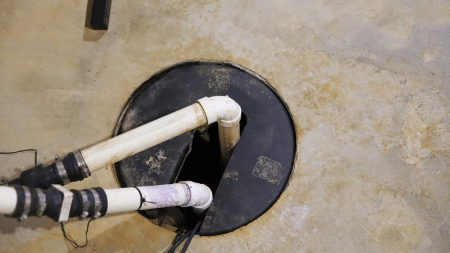
The sump pump sits in a basin and pumps water away from the home through a discharge line. In Western Washington, sump pumps often run frequently due to high groundwater levels and consistent rainfall.

A properly installed sump pump system may include:
- A primary pump for everyday use
- A sealed sump basin helps control moisture and odors
- A discharge line that directs water away from the foundation
Because storms can bring heavy rain and occasional power outages, many homeowners also install backup systems for added protection.
French Drain System
French drains are often part of a complete waterproofing system.
An interior French drain is essentially the perimeter drainage system installed inside the basement. It collects water and directs it to the sump pump.
In some cases, an exterior French drain may also be installed outside the home to reduce how much water reaches the foundation in the first place.
These systems are especially useful when:
- Soil stays saturated for long periods
- Water pools around the home during heavy rain
- Drainage issues exist due to slope or grading
In the Seattle area, managing water outside the home is often just as important as managing it inside.
Foundation Crack Repair
Cracks in foundation walls or floors are common and can allow water to enter directly.
In Western Washington, soil movement and long-term moisture exposure can lead to cracking over time. These cracks need to be addressed as part of the overall waterproofing system.
Crack repair typically involves sealing the crack from the inside using materials designed to stop water intrusion.
While sealing cracks alone is not a full solution, it is an important part of preventing direct entry points.
Discharge and Exterior Drainage Considerations
Once water is removed from the basement, it needs to be directed far enough away so it doesn’t return.
A complete system often includes:
- Proper discharge line placement
- Extensions that move water away from the home
- Exterior drainage improvements if needed
In Western Washington, poor exterior drainage is a common contributor to basement water problems. Addressing it helps reduce the amount of water reaching the foundation.
How These Components Work Together
Each part of the system has a specific role, but the effectiveness comes from how they work together.
The drainage system collects water
The sump pump removes it
The vapor barrier controls moisture
Crack repairs seal entry points
Exterior drainage reduces incoming pressure
Exterior drainage reduces incoming pressure
Discharge and Exterior Drainage Considerations
Installing just one solution, like a sump pump or crack seal, may help temporarily. But in most Western Washington homes, water problems are caused by a combination of constant moisture, soil conditions, and drainage issues. Without addressing all parts of the problem, water will often find another way in. That’s why a complete system is usually the most reliable long-term approach.
Waterproofing Experts in Seattle and Western Washington
At All Seasons Waterproofing & Drainage, basement waterproofing is approached as a full system designed around how water behaves on your property. Homes throughout Seattle, Bellevue, Everett, and Tacoma deal with steady rainfall, saturated soils, and ongoing groundwater pressure. Our team evaluates how water is moving around your home and recommends solutions designed to control it effectively.
Depending on the situation, that may include interior drainage systems, sump pumps, vapor barriers, crack repair, or exterior drainage improvements.
Understanding What You’re Really Getting
If you’re considering basement waterproofing, it’s important to understand what’s actually included. A proper system is designed to manage water at multiple levels, not just cover up visible issues. Knowing how each component works helps ensure you’re investing in a long-term solution.
Contact All Seasons Waterproofing & Drainage
If you’re dealing with basement moisture or want to understand what a waterproofing system would look like for your home, it’s worth having it evaluated. At All Seasons Waterproofing & Drainage, we help homeowners throughout Seattle and Western Washington identify water issues and install systems designed to keep basements dry.
Contact All Seasons Waterproofing & Drainage today to schedule an inspection and learn what the right solution looks like for your home.
More Recent Articles
Home If you’ve dealt with water in your basement, you’ve probably heard the term French drain. It’s one of the most common solutions for basement waterproofing, especially in the Seattle area where heavy rainfall and saturated soil are part of everyday conditions. But what exactly is a French drain, and...

Home If your basement has a musty smell but you don’t see any standing water, it’s easy to assume it’s not a serious issue. Maybe it comes and goes, or you’ve gotten used to it over time. In reality, that smell is usually a warning sign. Across Seattle, Bellevue, Everett,...
Home If you’ve ever walked downstairs after a storm and found water on the basement floor, you’re not alone. Basement leaks after heavy rain are a common issue for homeowners throughout Seattle, Bellevue, Everett, Tacoma, and the surrounding Western Washington area, making basement waterproofing an essential solution to protect your...

Home In Western Washington, heavy rain is part of life. Cities like Seattle, Bellevue, Everett, and Tacoma experience months of steady rainfall each year. When storms arrive, the ground quickly becomes saturated, and drainage systems are put to the test. For homeowners, that often leads to a frustrating situation: walking...